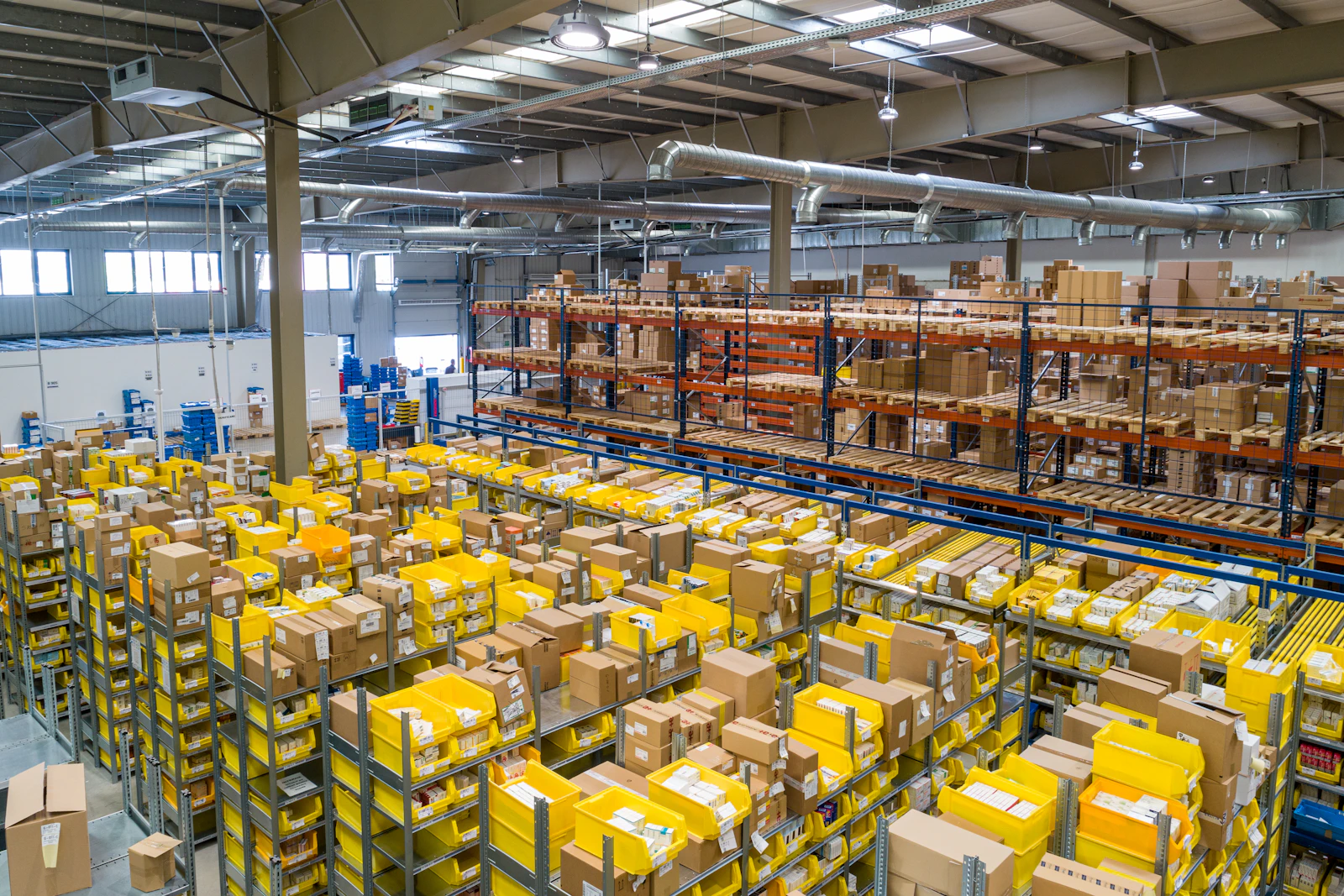
Software built and proven for retail and logistics platforms that can't go down on the one day traffic triples.
Inventory systems, order management, and last-mile logistics platforms, built and load-tested for peak-season demand, not average-day traffic.
How we adapt delivery to this industry.

Senior people on the actual work
No layered account teams between you and the build.

Designed for the bad day
Failover, retries and load behaviour proven before launch.

Threat modelled from the start
Secure defaults, dependency hygiene, and audit trails.

Budgets, not guesses
Latency and throughput targets set and measured.

Usable by everyone
WCAG 2.2 checks built into the pipeline.

Predictable, on a fixed cadence
Demo-ready increments and transparent reporting.
What building for retail and logistics actually requires.
Retail and logistics software is judged on a handful of days a year, not on the average week. A platform that runs cleanly in October and buckles on the first day of a seasonal sale hasn't been built or tested for its real traffic pattern.
Inventory has to stay accurate across channels in real time. Overselling a product that three systems each think is in stock is a customer-facing failure that generic functional testing won't catch, because it only shows up under concurrent load and multi-warehouse sync.
The order-to-doorstep chain runs through systems the platform doesn't own, carriers, payment processors, ERPs, and warehouse management systems, so integration failure modes have to be designed for and tested for, not assumed away.
What we build.
Inventory and order management systems with real-time, multi-channel and multi-warehouse stock synchronization.
AI-powered demand forecasting, dynamic pricing, and personalized recommendation engines built into the commerce flow.
Last-mile logistics and delivery tracking platforms, route optimization, carrier integration, and real-time customer visibility.
Payment, checkout, and fulfillment pipelines engineered for PCI-aware handling and peak-load reliability.
Where it breaks without care.
Inventory sync gets tested against a single warehouse and a single channel, so overselling and phantom stock only surface once multiple channels and locations are live in production.
Load testing gets run at average traffic instead of the platform's actual peak, so the system that passed every test buckles on the first day of a sale.
Carrier, payment, and ERP integrations get treated as always-available dependencies, so a single upstream outage cascades into failed orders instead of a graceful degradation path.
Recommendation and pricing models get shipped without evaluation against real purchase data, so they optimize for the wrong signal or drift silently over a season.
How we deliver it.
Multi-channel, multi-warehouse inventory sync validated under concurrent load, with overselling and phantom-stock scenarios tested before launch, not discovered after it.
Load and stress testing built around the platform's real peak, flash sales, holiday windows, and promotional spikes, with capacity and autoscaling validated against that number.
Carrier, payment, and ERP integrations tested for both the happy path and upstream failure, with fallback and retry behavior verified, not assumed.
Demand forecasting and recommendation models evaluated against historical purchase data with drift monitoring built in, so accuracy is tracked after launch, not just at handoff.
Checkout and payment flows verified against PCI-aware handling requirements before go-live.
Industry focus areas.
Real-time inventory and order management validated across channels and warehouses under concurrent load.
Peak-season load and stress testing sized to the platform's actual traffic spikes, not an average-day assumption.
AI-powered forecasting, pricing, and recommendation engines built and evaluated against real purchase data.
Last-mile logistics and delivery tracking tested end-to-end, including carrier integration failure modes.
Payment and checkout pipelines verified for PCI-aware handling and fulfillment reliability.
ERP and warehouse management system integrations tested for graceful degradation during upstream outages.
Tools and technologies.
Retail and logistics engagements need a stack that holds under seasonal spikes and keeps multiple systems of record in sync. The pairings below span the product build, the AI layer, and the load-tested release process; the right mix is sized to the platform's channel count and peak traffic profile.
Platform
AI
Testing & release
Evaluating a build partner?
A two-week scoping engagement covering peak-load architecture review, inventory and integration risk mapping, and a 90-day delivery plan across build and QA.
Retail and logistics: common questions.
What does QA for retail and logistics cover?
Inventory accuracy across channels, order management and fulfilment, last-mile tracking, and peak-season load. The recurring risk is stock and order state drifting out of sync between systems.
How do you test multi-channel inventory sync?
By exercising concurrent updates from every channel at once and asserting on the resulting state, since the failures appear under simultaneous writes rather than in sequential testing.
Do you test for peak season specifically?
Yes. We model the actual seasonal profile, including the sharp opening spike, and test at multiples of it so there is headroom evidence rather than an assumption.
Make your next releaseuneventful.
Book a free 30-minute scoping call. We'll review your stack and roadmap and show you exactly where the risk, and the opportunity, is hiding, no pitch deck required.