
Claude vs. GitHub Copilot vs. Cursor: choosing the right AI tool for each job on your team
Which AI coding tool should we standardize on is the wrong question. The right one is which tool fits which job, because Claude, Copilot, and Cursor are not actually competing for the same task.
By Quality AboveAll · July 12, 2026 · 8 min read

Where this fits in the wider picture.
Claude vs. GitHub Copilot vs. Cursor: choosing the right AI tool for each job on your team

We map the system before we touch it
Codebase, pipeline and risk assessed in week one.

Decisions written down, not assumed
Stack, boundaries and quality gates agreed up front.

Short sprints, working software
Every sprint ends with something running you can try.
Suites that gate every merge
Parallelised runs keep regression in minutes, not days.

You see what we see
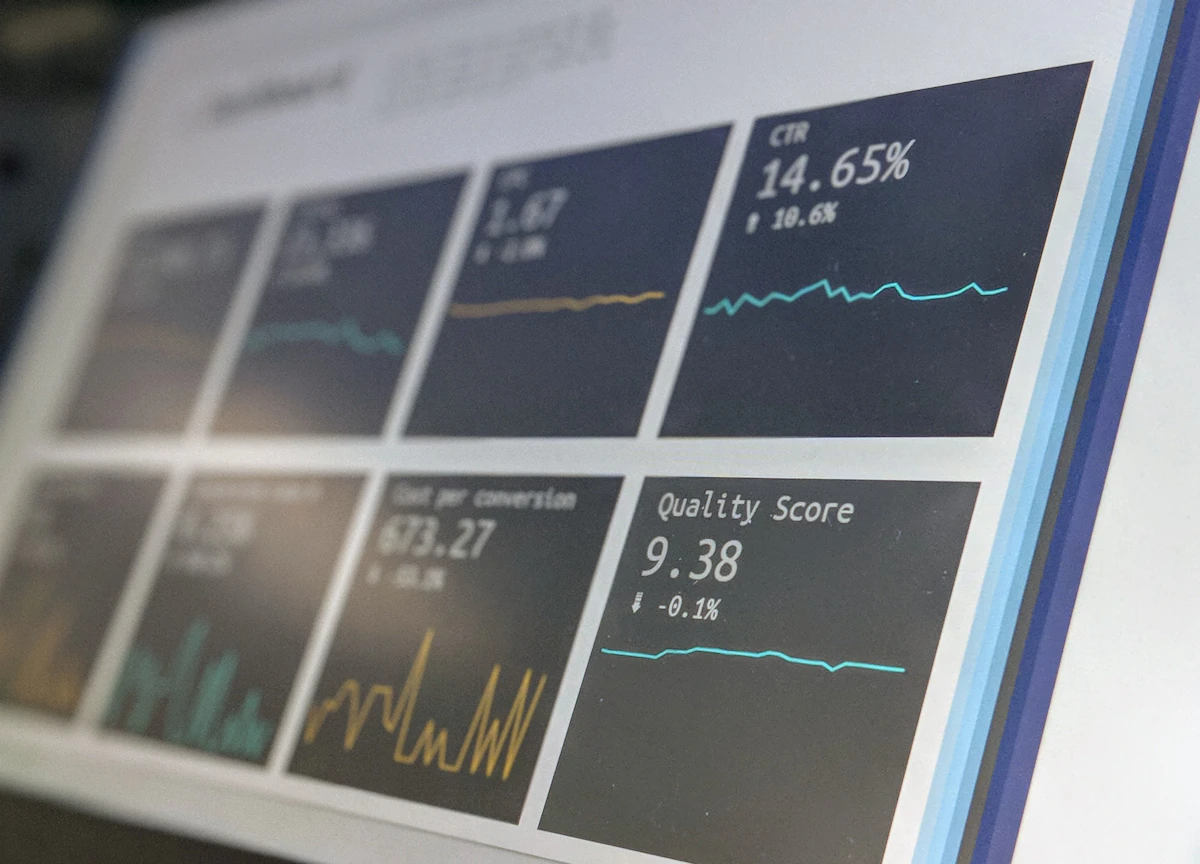
Coverage, escape rate and MTTR on a live dashboard.
Claude is strongest for deep reasoning, documentation, and research-heavy work. GitHub Copilot is fastest for in-editor autocomplete on familiar code. Cursor and Claude Code are built for agentic, multi-file refactors. Most engineering teams end up needing more than one, matched to the task, not the person.
Claude: reasoning, docs, and research-heavy work
Where Claude tends to win is anything that benefits from actually thinking through a problem before writing code, architecture decisions, debugging a subtle issue across multiple files, drafting a technical spec, or reviewing a pull request for logic errors, not just style. Long context windows also make it well suited to reasoning across an entire codebase or a long design document at once.
GitHub Copilot: fast in-editor autocomplete
Copilot's strength is speed on familiar ground: finishing a function you've already started, generating boilerplate, writing tests for code that follows a pattern it's already seen. It's deeply embedded in the editor, which makes it the lowest-friction tool for the moment-to-moment act of typing code, even if it's not the tool you'd reach for to plan an architecture.
Cursor and Claude Code: agentic, multi-file work
Where these tools differ from both of the above is scope: instead of completing one line or answering one question, they can plan and execute a change across many files, running commands, checking the result, and iterating, closer to the agentic loop described in what agentic AI actually means. That makes them the right choice for larger refactors, migrations, or well-scoped feature work you're comfortable delegating more of, with review at the end rather than every keystroke.
A simple decision matrix by role
- Backend engineers doing architecture-heavy work: Claude for design and reasoning, Copilot or Cursor for implementation.
- Frontend engineers building familiar UI patterns: Copilot, where fast autocomplete on repetitive patterns pays off most.
- Anyone doing a large refactor or migration: Cursor or Claude Code, where agentic, multi-file execution saves real hours.
- QA and technical writers: Claude, for generating test cases, documentation, and release notes from context, not just code completion.
The teams that get the most value aren't the ones that picked one tool. They're the ones that matched tools to tasks and trained people on when to switch.
Cost, licensing, and data residency
For regulated teams, this decision isn't purely about capability. Data residency, whether code and prompts are used for model training, and enterprise admin controls vary meaningfully between Claude, GitHub Copilot, and Cursor's own policies. That's worth a real review before standardizing, not an assumption based on whichever tool a few engineers already like.
If you're trying to figure out the right mix for your team rather than picking one tool by default, our agentic AI and ongoing retainer engagements both start with exactly this kind of task-by-task audit. Get in touch if you want a second opinion.
Questions about this topic.
Which AI coding assistant is best?
It depends on the work. Inline completion suits high-volume boilerplate, chat-based assistants suit reasoning about unfamiliar code, and agentic editors suit multi-file refactors. Many teams use more than one.
Can AI assistants replace developers?
No. They accelerate well-specified, pattern-heavy work and are weakest exactly where engineering judgement matters: knowing why a system is built the way it is, and debugging subtle production behaviour.
What should we consider before rolling one out?
Your position on sending code to a hosted service, especially under client confidentiality, plus the review discipline needed so higher output volume does not become architectural drift.
How ready is your product to ship and scale?
Answer 12 questions and get a maturity score across architecture, delivery, quality and security, plus the three things we would fix first. No email required to see your result.
Build software thatships and holds.
Tell us what you're building, custom software, an AI product, or a QA transformation, and we'll come back with a scoped plan and a fixed first milestone.